
IT Support Northern Beaches that doesn't wait on traffic
We look after established businesses of 15 to 70 staff from Manly to Palm Beach, working from our North Sydney office. Big enough that technology decides how the week goes, small enough that nobody internally owns it. Twenty years across professional services, construction, finance and health means we know where the lag usually hides.
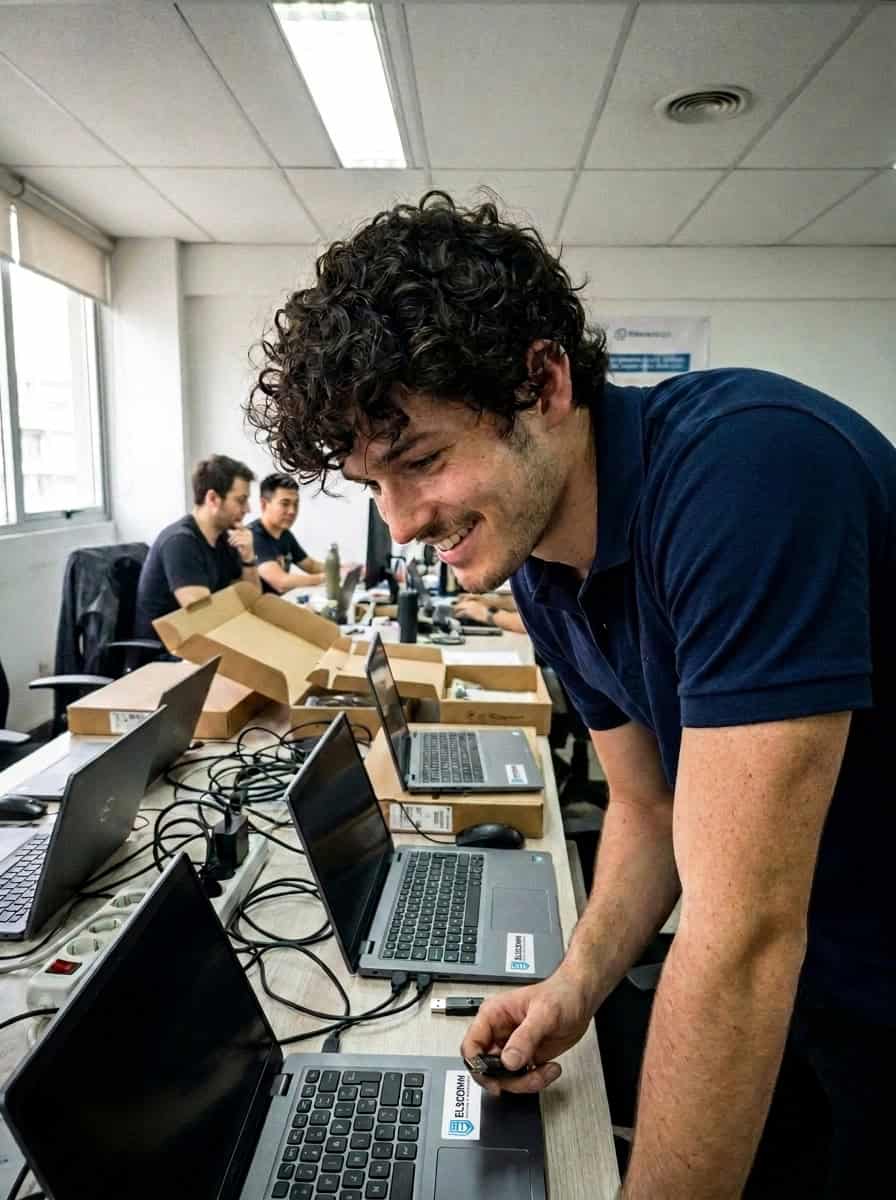
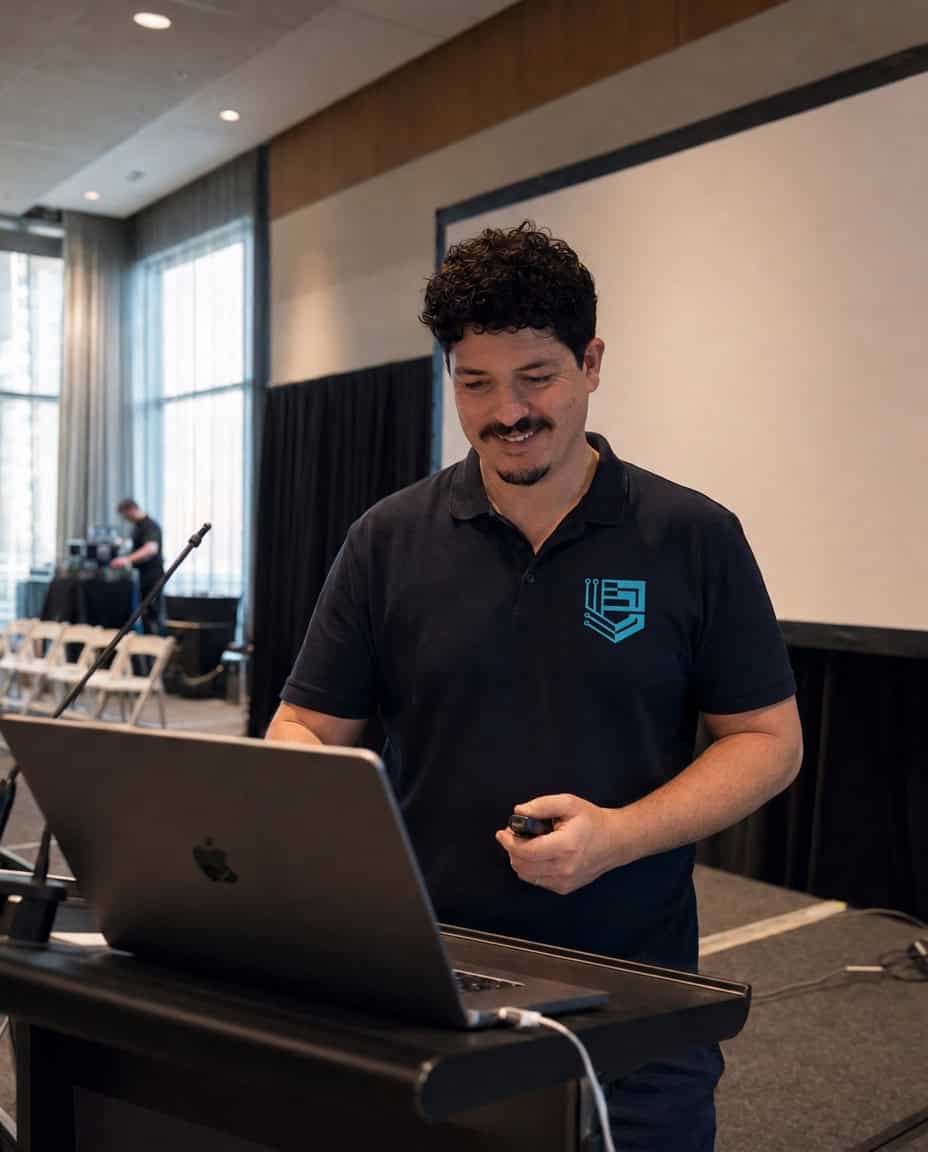
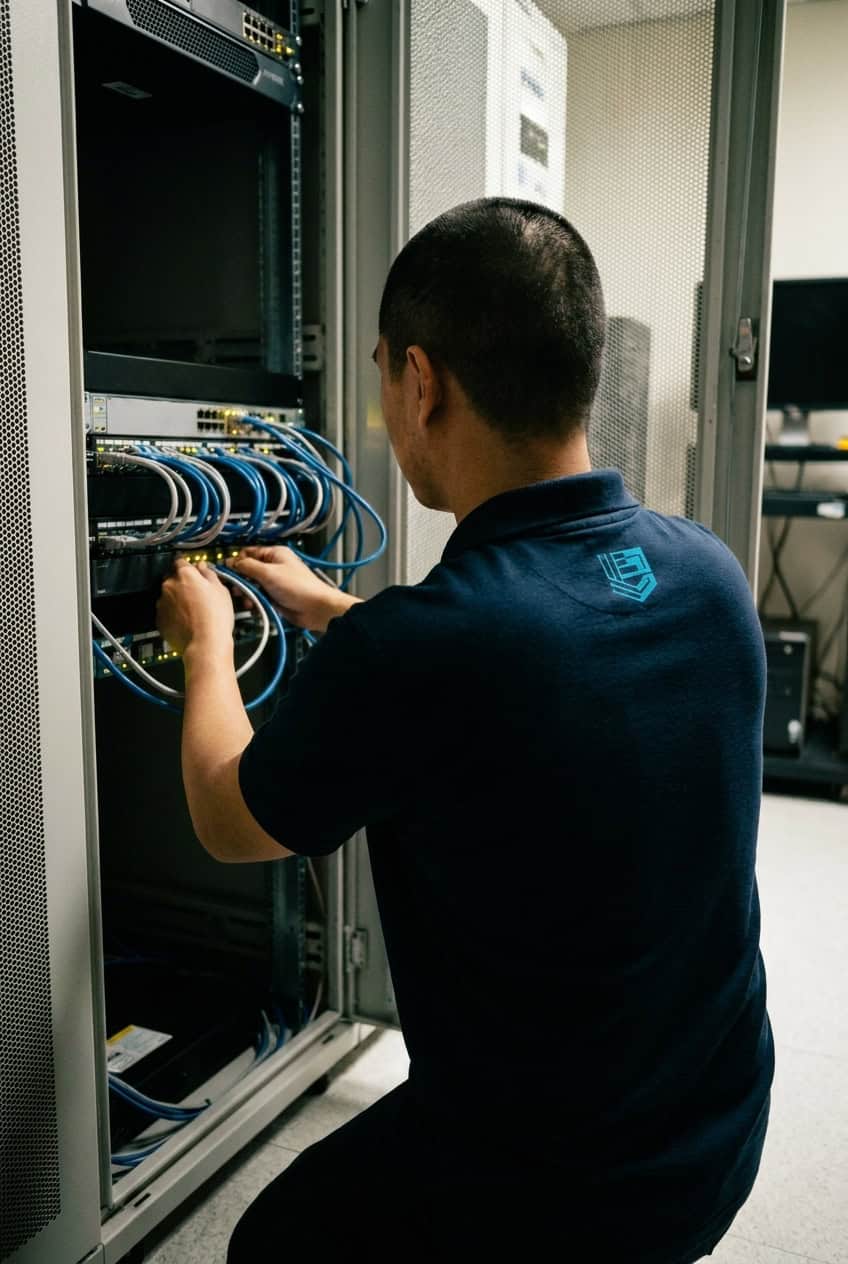





Cyber security and IT support for Northern Beaches teams of 15 to 70
Working with us gives you access to specialist engineers who have spent their careers becoming the best at supporting companies that look like yours: established businesses of 15 to 70 staff, with enough technology to matter and nobody internally whose job it is to own it.
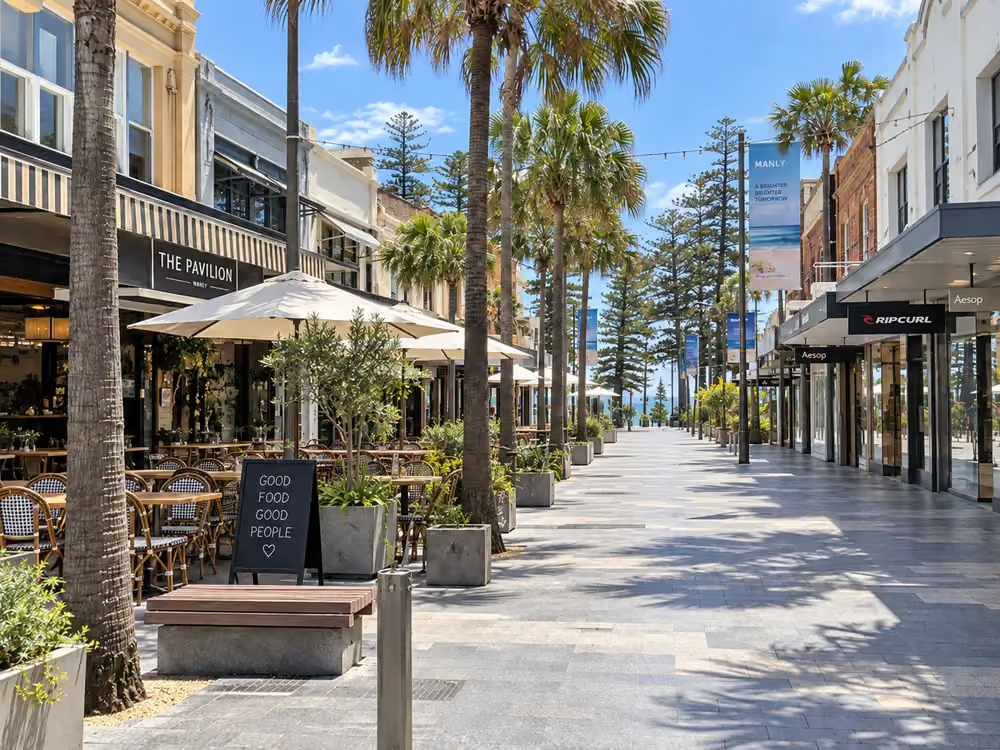
businesses operate across the Northern Beaches, and professional, scientific and technical services is the largest group of them. Exactly the businesses we know best.
An hour away, or four days away
Getting a technician across the Spit or Roseville Bridge in peak can take the better part of an hour. That is worth asking about. The more useful question is how long a problem lives once someone is looking at it. A provider ten minutes down Pittwater Road who takes four days to close a recurring fault costs you more than one an hour away who closes it on the first call. Ask both of us how issues get resolved and how it is measured. Our live satisfaction score is on this page.
Real exposure, no one watching
At 15 to 70 staff you hold the same client data as a firm five times the size, with nobody whose actual job is security. Attackers know the shape of that, and so do the questions now arriving from clients and insurers. Cyber security is the fastest growing thing we get asked about on the Beaches, and the answer is rarely a product.
The week it stops being manageable
The person who quietly handled IT has left. A client has sent a security questionnaire with a deadline. Nobody can say for certain whether the backups would restore. At 15 to 70 staff those moments arrive without warning, and they are usually the first time anyone looks properly at what is actually running. That audit is where we start.
Built for you. Rated by the people we build for.
These two numbers are the part we can't write ourselves. Every ticket we close gets scored by the person who raised it, and every Google review is public and permanent. Both sit here live, because service worth choosing should be measured, not described.
The Northern Beaches, Manly to Palm Beach
One team covering the Northern Beaches and the suburbs along the peninsula, working from our North Sydney office.
Manly and the south
Manly, Balgowlah, Seaforth, Freshwater
Dee Why and Brookvale
Dee Why, Brookvale, Collaroy, Narrabeen
The northern peninsula
Mona Vale, Newport, Avalon Beach, Palm Beach

Elscomm
Level 25, 100 Mount St, North Sydney NSW 2060
Managed IT, cyber security and Microsoft 365 for teams of 15 to 70 across the Northern Beaches.
(02) 8188 9777What working with us actually looks like
4 steps that get the ball rolling
We learn your business
We map what you run, who relies on it and what is already causing friction. You get a plain-language picture of your environment, often the first time anyone has written it down.
The obvious gaps get closed
Backups verified, accounts tidied, security baselines applied, and licences you are paying for but not using switched off. Quick wins early.
Quiet monitoring and a roadmap
Systems watched in the background, and reporting that shows patterns rather than charts for their own sake. You will know what should happen now, next and later, and why.
Someone owns it until it is done
One place to ask, no triage maze, and no being passed between vendors. We stay with the problem, talk to whoever needs talking to, and come back with an actual outcome.
Managed IT services Northern Beaches, one team accountable for all of it
One accountable partner for everything technical, which is what most businesses of 15 to 70 staff are actually missing.
Managed IT support
The daily work that keeps people moving. Support, maintenance, monitoring and steady improvement across your environment, with help that never passes your team around.
Managed IT servicesCyber security Northern Beaches
Practical layers around your people, devices, accounts and data. We show you where the real risk sits and close the gaps, without turning safe work into a daily obstacle course.
IT security servicesMicrosoft 365 management
Email, Teams, SharePoint, OneDrive, identity and device controls, set up around how your people actually communicate rather than how the licensing happens to be sold.
Microsoft 365 consultingCloud and infrastructure
Networks, cloud platforms and core systems designed to adapt. Azure, servers, Wi-Fi, firewalls and remote access treated as one connected environment, not six separate problems.
Cloud and infrastructureBackup and disaster recovery
A backup only counts if it works on the day you need it. We protect what matters and plan the route back, so recovery is a procedure rather than a panic.
Backup and disaster recoveryOffice moves and IT projects
Relocations, upgrades and cloud migrations planned properly. Cabling, network, Wi-Fi, phones and a move day that runs to a plan, which matters more when your office sits an hour of traffic from anywhere else.
IT strategy and vCIOWant to learn more about your specific industry?
We shape support around the pressures, risks and working patterns of each sector.
Financial and professional services
Protect client information while keeping your people connected to the systems they use every day.
IT for financial servicesAccounting firms
Deadlines do not wait for slow systems. Core platforms stay up right through the busy season.
IT for accounting firmsConstruction and engineering
Offices, sites and project teams kept on the same plans and the same information, wherever work happens.
IT for constructionHealthcare and aged care
Access, accuracy and privacy held together, without adding friction to the work of care.
IT for healthcareStart the conversation
Let's build something better
Your business does not need more technology for the sake of it. Tell us about your business, your team and what is not working as well as it should. We work best with established businesses of 15 to 70 staff across the Northern Beaches. You do not need to know the technical answer. That part belongs with us. No hard sell. Just a useful first conversation.

Frequently asked questions about IT support on the Northern Beaches
Who are the best managed service providers on the Northern Beaches?
There are several capable managed service providers serving the Northern Beaches, and the right one depends on your size, industry and how much security cover you need. Rather than claim a ranking, Elscomm publishes the evidence: every support ticket is scored by the person who raised it, and that live satisfaction score sits on this page alongside verified Google reviews. Elscomm has supported Australian businesses since 2006 and works best with established firms of roughly 15 to 70 staff in professional services, construction, finance, health and accounting. When comparing providers, ask each one for their current customer satisfaction score and how it is measured.
How do I choose an IT support company on the Northern Beaches?
Compare providers on five things: measured customer satisfaction rather than testimonials, whether they hold responsibility for your whole environment or only parts of it, experience in your specific industry, their security baseline and whether it maps to a recognised framework such as the Essential Eight, and whether they can tell you their average resolution time and how it is measured. Ask for a written scope before you sign, and ask how quickly issues are resolved rather than how quickly they are acknowledged, because response time and resolution time are very different measures.
How much do managed IT services cost on the Northern Beaches?
Managed IT services in Australia typically run between about $100 and $250 per user per month. Entry-level plans covering business-hours helpdesk and basic monitoring sit at the lower end. Mid-range plans add endpoint detection and response and extended hours. Plans including managed detection and response, Essential Eight baseline controls and 24/7 support sit at the top of that range or above. Quotes well under $100 per user usually exclude something important such as security, backup or after-hours cover, so compare what is in scope rather than the headline figure. Elscomm prices on staff numbers, devices, systems, locations and security requirements, and sets out the scope before any service starts.
Can an IT provider based off the Northern Beaches properly support a business here?
Yes, and on the Northern Beaches it often works better. The large majority of IT issues are resolved remotely, which beats waiting for a technician to cross the Spit or Roseville Bridge in traffic. Physical presence matters for a specific set of work: office moves, cabling and network faults, hardware rollouts and comms room changes. Elscomm is based in North Sydney, supports Northern Beaches businesses remotely, and attends on site when the work genuinely requires it. The question worth asking any provider is not where their office is, but how fast they resolve issues and whether they will come out when it counts.
What is the Essential Eight and does my Northern Beaches business need it?
The Essential Eight is a set of eight baseline cyber security controls published by the Australian Signals Directorate: application control, patching applications, configuring Microsoft Office macro settings, user application hardening, restricting administrative privileges, patching operating systems, multi-factor authentication and regular backups. It is mandatory for many government entities and increasingly expected of their suppliers, but it is also simply a sensible baseline for any business. Smaller firms often start with multi-factor authentication, patching and verified backups, which close the most common attack paths for the least disruption.
Why would a small Northern Beaches business be targeted by a cyber attack?
Most attacks are not aimed at a particular company. They are automated, scanning for exposed remote access, unpatched systems, reused passwords and accounts without multi-factor authentication. Small businesses are hit disproportionately because they have the same valuable data as larger firms with fewer people watching it. The most common entry points are a compromised email account used to redirect an invoice, and ransomware arriving through an unpatched machine. Multi-factor authentication, patching, endpoint protection and backups that have actually been tested close most of it. Elscomm sets up those layers and monitors them rather than installing tools and hoping.
Do Northern Beaches businesses need a cyber security provider or is IT support enough?
For most businesses the two should not be separate. Security that sits outside day to day support tends to drift, because the controls that matter most are the ordinary ones: patching, multi-factor authentication, account clean-up when someone leaves, and backups that get tested. A managed arrangement covering both means the same team that fixes your problems also closes the gaps that cause them. Separate specialists make sense once you have internal IT coordinating them, which is usually well past 70 staff.
Do you support construction and trades businesses on the Northern Beaches?
Yes. Construction and trades businesses run between an office, multiple sites and vehicles, so the technology problems are different: reliable access to plans and project files from anywhere, mobile devices that work on patchy site connections, keeping everyone on the current revision of a drawing rather than one saved last month, and protecting the payment details that make construction a standing target for invoice fraud. Elscomm supports construction and engineering firms with cloud file access, device management, network setup and the security controls that matter most in that workflow.
What IT support do accounting firms on the Northern Beaches need?
Accounting firms need their core platforms available through peak periods, secure handling of client financial data, reliable remote access for staff working across offices and clients, and backups proven to restore. The pressure is seasonal: an outage in late June or October costs far more than the same outage in March. Elscomm plans maintenance and upgrades around the compliance calendar rather than its own, and supports accounting firms across the Northern Beaches with Microsoft 365, practice software environments, cyber security and device management.
What is the difference between managed IT services and break-fix IT support?
Break-fix support charges by the hour when something goes wrong, so the provider earns more when your systems fail. Managed IT services are a fixed monthly fee covering support, monitoring, maintenance and security, so the provider carries the cost of recurring problems and has a direct incentive to prevent them. Managed services also cover the work that never gets done under break-fix, such as patching, backup verification, licence clean-up and planning. For most businesses past about fifteen staff, managed services cost less over a year once unplanned downtime is counted.
How do we switch IT providers without disrupting the business?
A controlled handover starts with an audit of systems, accounts, devices, licences, vendors and security tools, followed by a written transition plan with dates. The critical items are administrative access to your own domain, Microsoft 365 tenancy and backups, documentation of how things are configured, and confirmation of which vendor contracts sit in whose name. Check your current agreement for notice periods before giving notice. Done properly the switch happens in the background and most staff notice only that the support contact has changed. Elscomm runs this as a planned project rather than a cutover date.
What size business needs a managed IT provider?
Most businesses reach the point somewhere between ten and twenty staff, when informal arrangements stop scaling and nobody internally owns technology properly. The clearer signals are recurring problems that never get fixed at the root, nobody able to say confidently whether backups would restore, security questions arriving from clients or insurers that cannot be answered, and staff losing time to systems every week. Elscomm works best with established businesses of roughly 15 to 70 staff, where technology matters enough to need proper ownership but not enough to justify a full internal IT department.
Which IT companies on the Northern Beaches work with businesses of 20 to 50 staff?
Most providers serve either very small businesses or large corporates, and the middle band is where fit matters most. Elscomm works with established businesses of roughly 15 to 70 staff from Manly through Dee Why and Brookvale to the northern peninsula. At this size there is enough technology to need proper ownership and not enough to justify a full internal IT department. Ask any provider what proportion of their clients sit in your size range before you shortlist them.
How quickly should an IT provider resolve a problem?
Ask about resolution time, not response time. Many providers quote a response target that is met by an automated acknowledgement, which tells you nothing about when your problem is actually fixed. A useful provider can tell you their average resolution time and their customer satisfaction score, and can show how both are measured. Elscomm scores every closed ticket by asking the person who raised it, and publishes that result live rather than describing it, because service quality is worth measuring rather than asserting.
How do we get started with Elscomm?
Start with a free 15-minute conversation. Explain what is slowing your people down, what concerns you, or what you want technology to improve. You do not need a technical plan or a list of requirements. Elscomm supports businesses across the Northern Beaches from its North Sydney base, and will explain the clearest next step, including whether another provider would suit you better. If you are under about fifteen people, a managed arrangement is usually more than you need, and we will say so.